
Ground, Never Etched
Every slab is opened with a diamond grinder or a shot blaster to a measured surface profile, so the epoxy has a texture to bite into rather than the uneven, residue-laden surface an acid etch leaves behind on a hurried job.
Garage, basement and commercial floors opened with diamond grinding, checked for moisture, and quoted with the product, coats and thickness in writing.
Urbandale Epoxy Flooring has spent 20+ years installing epoxy flooring in Urbandale, IA and across central Iowa, from two-car garages and finished basements to flex bays, restaurant kitchens and warehouse floors. Our work covers flake and metallic epoxy, polyaspartic topcoats, polished concrete, concrete repair and the grinding that comes before all of it.
Every floor we install starts with the slab rather than the color chart. We grind it open, test it for moisture, map the cracks and old coatings, and write the product line, the number of coats and the finished thickness into the proposal, so the floor that goes down can be checked against the quote.
That order matters more than any single product. A premium coating over a damp, smooth or contaminated slab fails the same way a cheap one does, and most of the peeling floors we are called to replace failed at the surface preparation stage, not in the can.
What we do
Ground, tested and coated epoxy floors for Urbandale and central Iowa
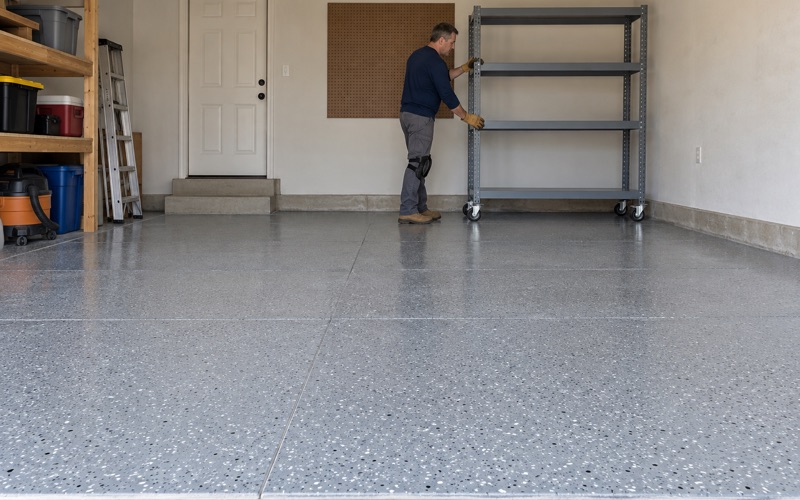
Ground, moisture-tested and built-up epoxy garage floors with salt-resistant topcoats for Urbandale homes and nearby suburbs.
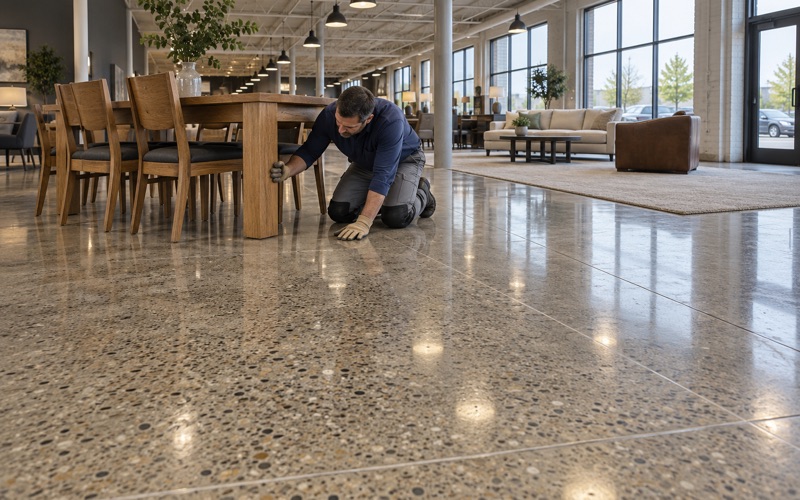
Ground, densified and polished concrete floors for Urbandale showrooms, offices, warehouses and homes, with a test area on your slab first.
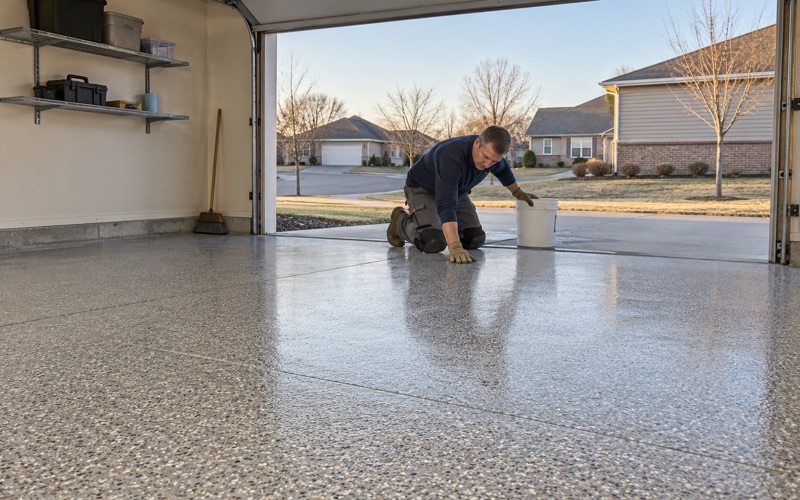
Fast-curing, UV-stable polyaspartic floor coatings and topcoats for Urbandale garages, shops, showrooms and commercial floors.
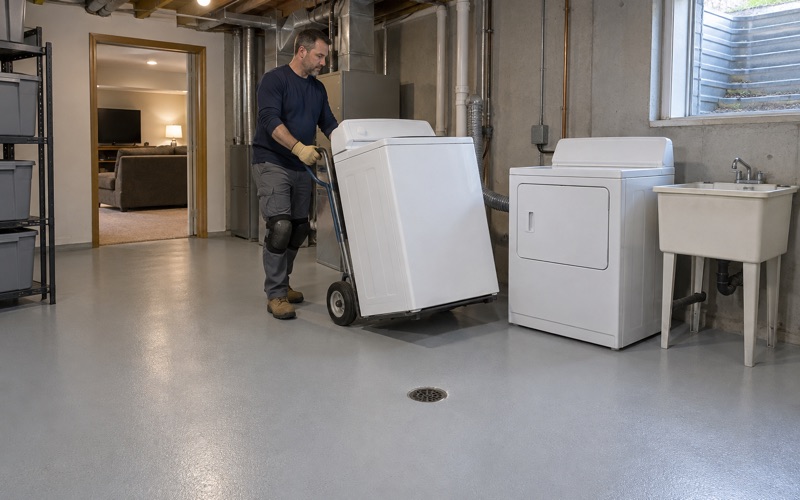
Moisture-tested basement floor epoxy for Urbandale homes, planned around sump pits, floor drains, old paint and the slab's own water history.
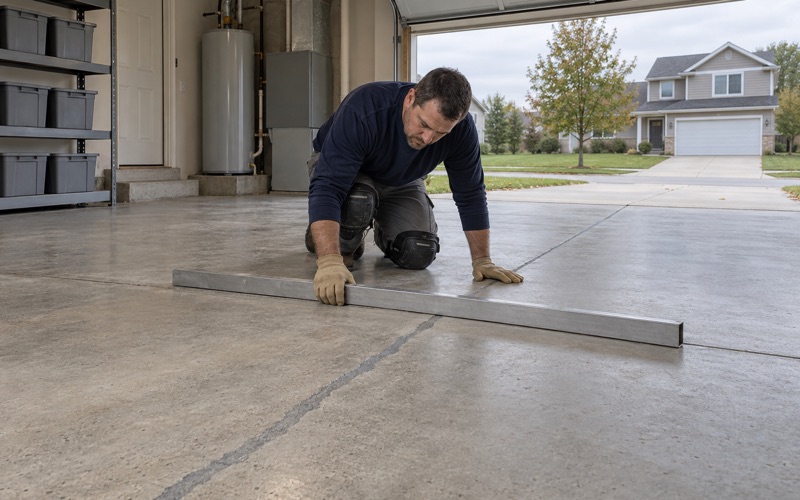
Crack, spall, joint and scaling repair for Urbandale garage, basement and commercial slabs, done before coating or on its own.
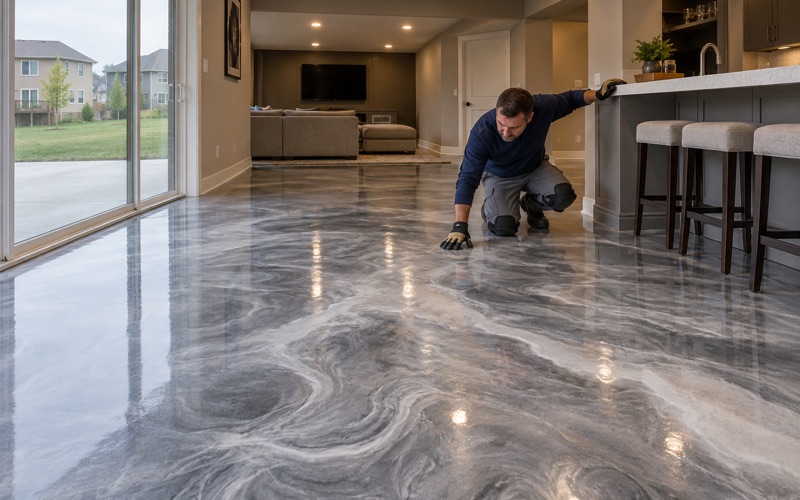
Marbled metallic epoxy floors for Urbandale basements, showrooms, lobbies and garages, poured in one pass over a ground, flat slab.
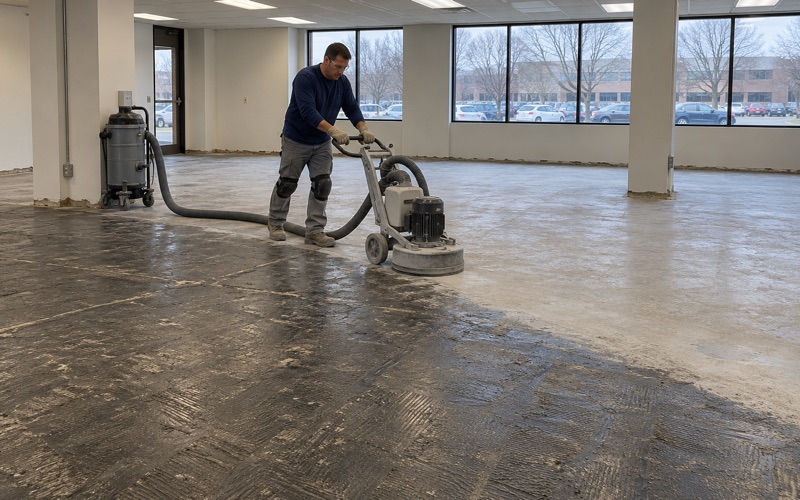
Diamond grinding and shot blasting for Urbandale slabs: coating and mastic removal, leveling and a measured profile for the next floor.
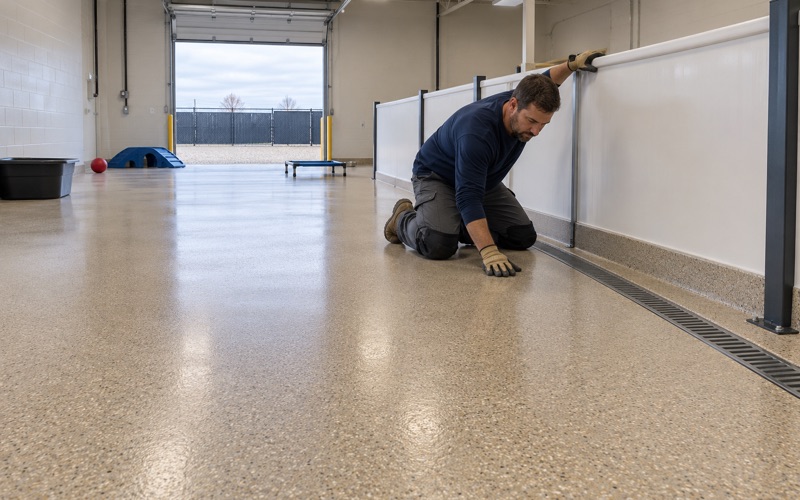
Epoxy and resinous floors for Urbandale flex bays, offices, clinics, retail and service shops, phased so the business stays open.
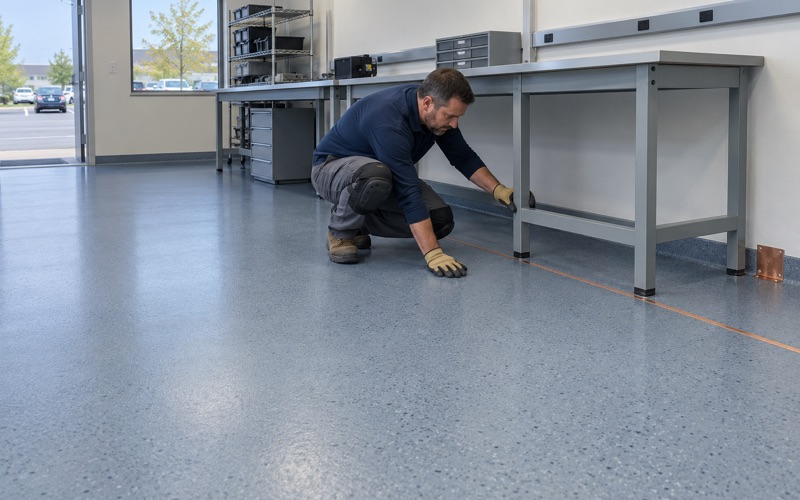
Static-dissipative and conductive epoxy floors for Urbandale electronics benches, labs, server rooms and clean assembly areas.
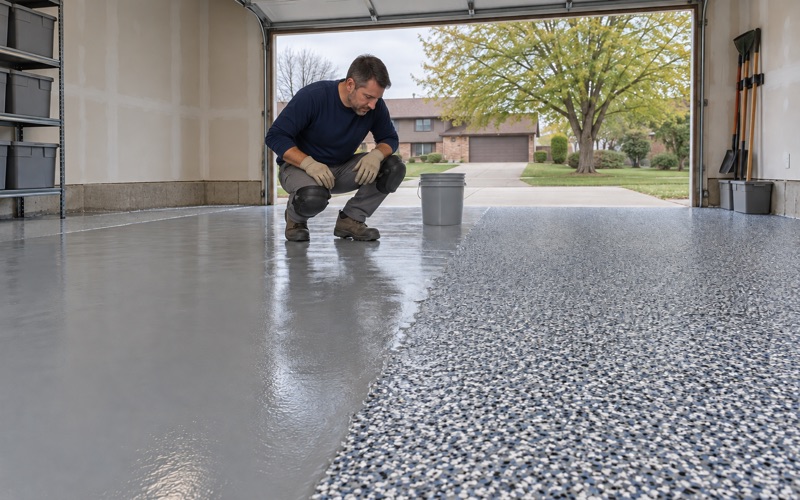
Full and partial vinyl flake epoxy floors for Urbandale garages, basements, shops and commercial spaces, built over a ground slab.
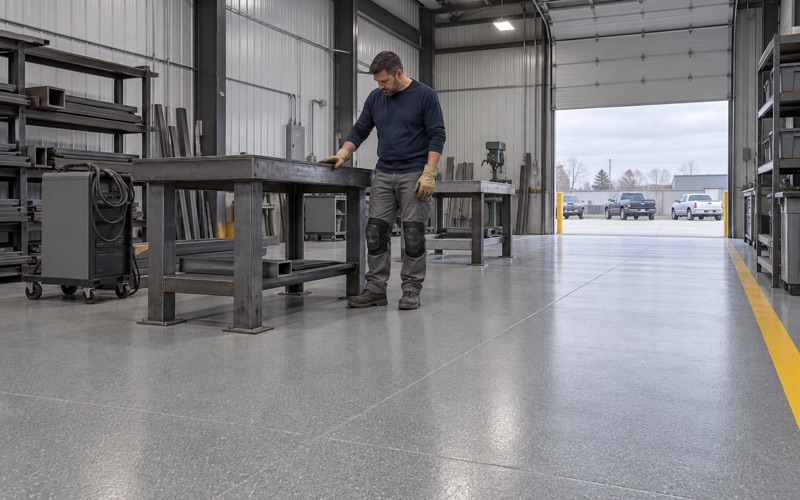
Heavy-duty epoxy, urethane cement and polished floors for Urbandale warehouses, plants, fleet garages and light industrial bays.
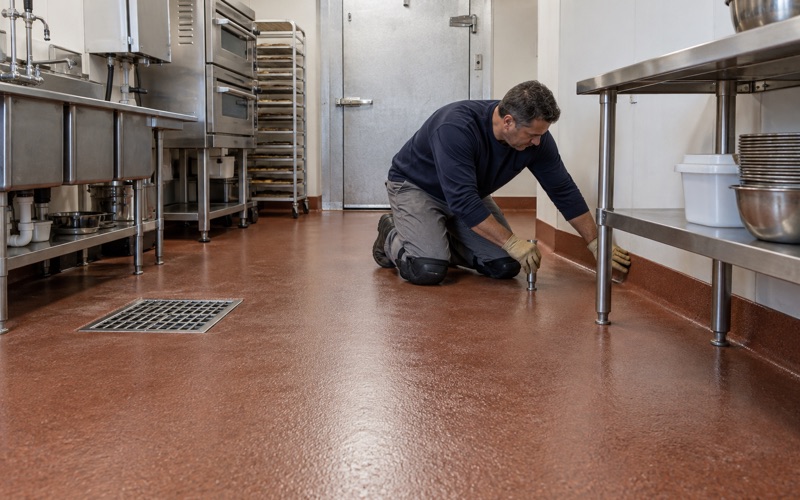
Seamless urethane cement and epoxy kitchen floors with integral coved bases for Urbandale restaurants, cafeterias and food prep spaces.
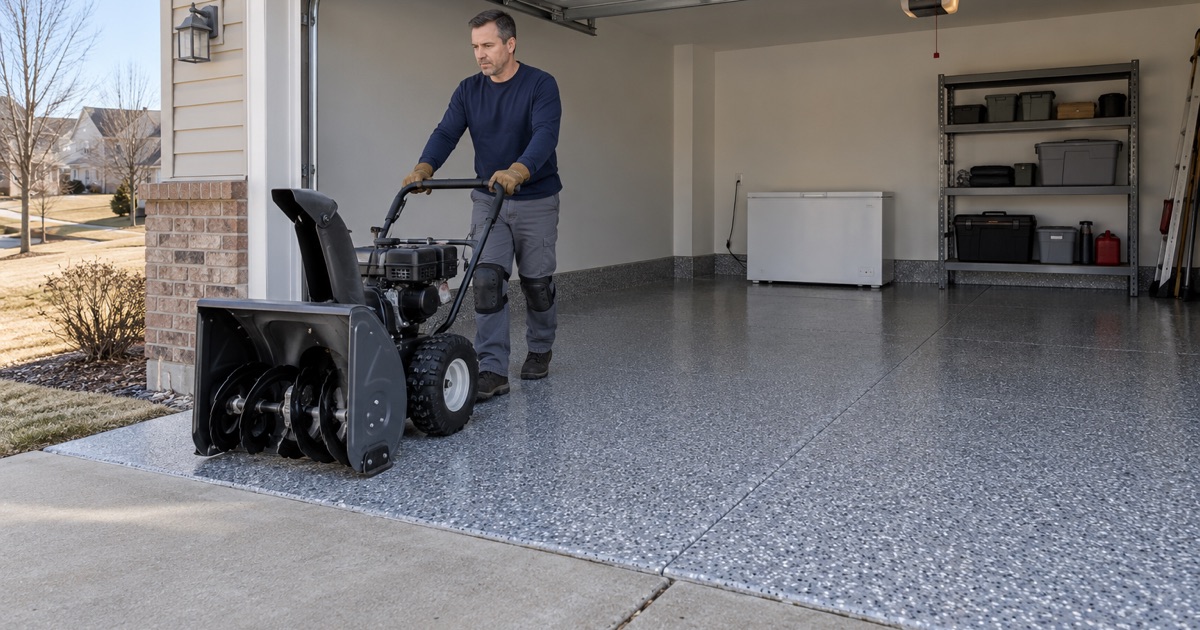
We have been grinding and coating concrete for more than twenty years, long enough to see what freeze-thaw cycles, rock salt and damp basements do to a floor over time. That history shapes how we scope every job: we test first, and we tell you when a slab should be repaired before it is coated.
Every slab is opened with a diamond grinder or a shot blaster to a measured surface profile, so the epoxy has a texture to bite into rather than the uneven, residue-laden surface an acid etch leaves behind on a hurried job.
No price is final until the slab’s moisture test is in the scope, because Urbandale floors sit on Des Moines Lobe till that ranges from well-drained rises to swales where the water table sits inches down, so a coating is never laid over an assumed-dry slab.
Our proposal names the product line, the number of coats and the finished thickness, so the floor can be measured against what you paid for rather than taken on trust after the crew leaves.
Cure schedules follow the slab temperature and the dew point spread at its surface, so an unheated garage in a central Iowa winter waits for workable conditions rather than being coated on a calendar date and left to blush and soften.
Garage systems here are chosen for the brine and rock salt that ride in on tires from November through March, so the topcoat is built to shrug off chloride-laden slush rather than etching and dulling by the first thaw.
We explain what a coating warranty excludes before the job is sold, starting with moisture vapor and hydrostatic pressure, so a basement owner knows where the coverage ends rather than discovering it after a wet spring.
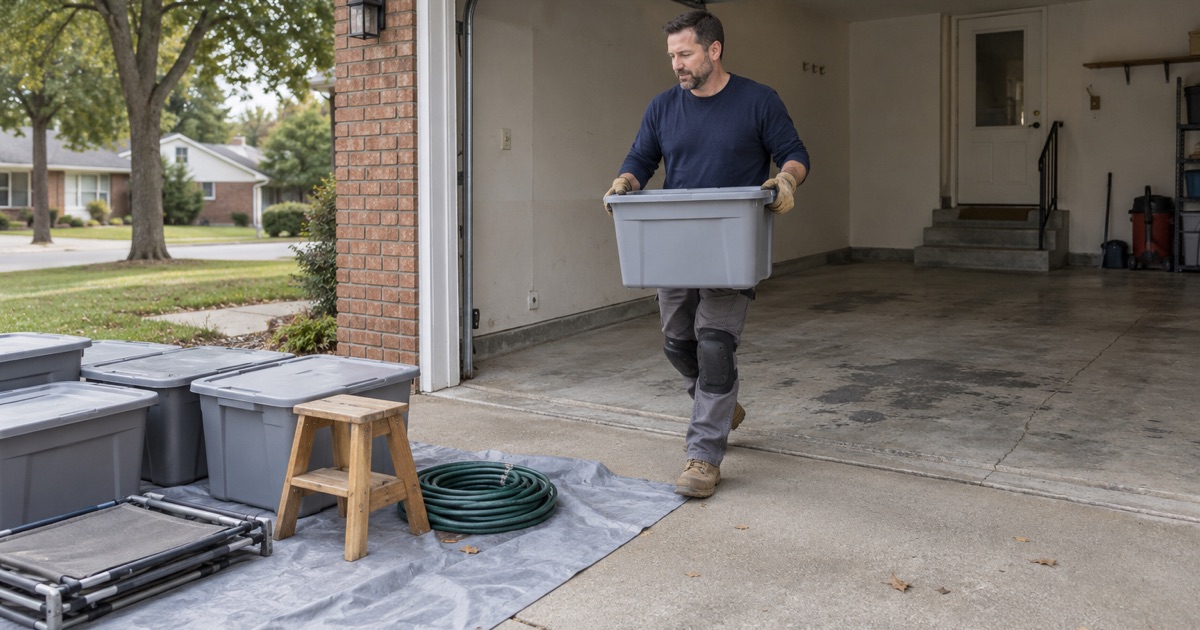
A garage floor starts with a walk-through, a moisture test and a crack map, then moves to grinding, repairs, the base coat, any flake broadcast and the topcoat. Each step has its own cure window, and we tell you up front when you can walk on the floor and when the car can come back in.
In an attached garage the house door is a few feet from the grinder. We capture grinding dust at the machine with a vacuum shroud, seal the house door, and offer low-odor coatings so the rooms on the other side of the wall stay livable while the floor cures.
The residential code lets builders leave the vapor retarder out from under garage slabs under the IRC R506.2.3 exception, so a garage poured last decade can still pull moisture from the ground. We test the garage slab whatever year the house was built, because a newer house is not proof of a drier floor.
On garage floors we start with an ASTM D4263 plastic sheet test as a screen and move to ASTM F1869 calcium chloride kits or ASTM F2170 relative humidity probes when the reading calls for it. A high result points to a moisture-mitigation primer before the color coat, not a thinner coating and a hope.
We map every crack, spall and pitted patch before pricing, then fill and grind them flush so they do not telegraph through the finish. When a slab has heaved, settled or broken into loose pieces, we say plainly that it should be repaired or replaced first, because a coating cannot hold a failing slab together.
Calcium chloride and rock salt deicers ride in on tires and melt into the pores of a bare slab, where freeze-thaw cycles pop the surface into flakes and scaling. A dense, sealed coating keeps that brine on top where it can be squeegeed out, and we pick systems that hold up to salt from November through March.
Epoxy and polyaspartic chemistry both slow down in the cold, and a slab near the dew point can collect moisture that leaves amine blush or a cloudy, weak film. We read the slab temperature and dew point spread before we mix anything, and an unheated garage may have to wait for spring.
Hot tire pickup happens when a warm tire softens a thin coating and pulls it off the slab as it cools, usually where the surface was never ground. A 100% solids epoxy base on a properly profiled slab, finished with a hard topcoat, is how we keep tires from lifting the floor in a few seasons.
A big-box kit is usually a thin water-based epoxy applied over an etched or merely washed slab, which is why so many peel at the tire paths. Our floors are ground to a profile, built to a stated thickness with commercial-grade resins, and topcoated, so the difference shows up in the third winter rather than on the first day.
Garage floor pricing moves with the floor’s size, the repairs it needs, any old coating to remove, the moisture result and the system you choose. A solid color floor costs less than a full flake broadcast with a polyaspartic topcoat, and our written proposal shows each of those choices so you can see where the money goes.
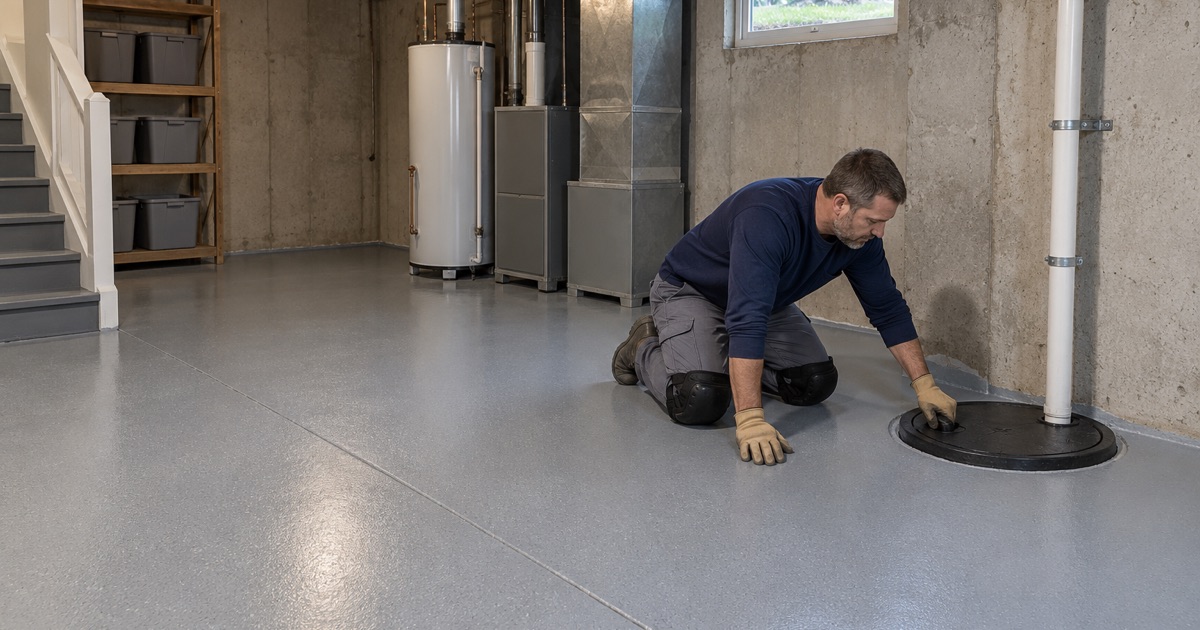
A basement slab sits in the ground, so the first question is not color but water. We check for past water lines, test the slab, and look at the sump pit and floor drain before we suggest any system, because a basement coating that traps moisture will lift long before it wears out.
Drain tile and sump pits are how many basements stay dry, and the coating has to work around them rather than over them. We leave the sump pit and floor drain open and working, finish neatly to the lid and drain body, and keep grinding slurry and dust out of the drain line.
Many basement floors carry decades of paint, patching compound and black tile mastic. We grind these down to sound concrete and test what is left, because a new coating bonds only as well as the weakest layer under it, and old mastic is often the weakest of all.
White powder on a basement floor is efflorescence, salt carried up through the concrete by moisture and left behind as the water evaporates. It tells us the slab is moving water, so we test it, grind the salts off, and use a moisture-mitigation primer where the reading calls for one.
When ASTM F1869 or F2170 results run past what a standard epoxy tolerates, we specify a moisture-mitigation primer under the coating. It is built to hold back vapor that would otherwise blister the floor, though it does not stop liquid water or hydrostatic pressure from a high water table.
After a storm or a backup, a basement slab needs cleanup, drying and time before it can be tested honestly. In the June 30, 2018 storm, 7.32 inches of rain fell at 67th and Meredith in Urbandale, and floors like that need weeks, not days, before a coating is responsible.
Coated basement floors work well in laundry rooms, workshops and home gyms, where spills, dropped tools and rubber mats all land on the slab. We choose the texture and topcoat for each use, adding grip near washers and a harder finish where tools and weights hit the floor.
Urbandale’s Foundation Drain Disconnection Program is moving older homes’ footing drains off the sanitary sewer, usually by adding a sump pump. A new pit means a cut and patched slab and a lid in the floor, so we plan the coating around the patch and the lid rather than around the floor as it was.
Most coating warranties exclude moisture vapor transmission and hydrostatic pressure from under the slab, and those are exactly the failures a basement is prone to. We walk through the exclusions before the job is sold, so the warranty you hold matches the floor you have.
A floor coating is never sold here as radon work, because radon testing and mitigation in Iowa take a state credential under Iowa Code chapter 136B. A coating is not waterproofing either: it finishes a dry slab, and a wet basement needs a drainage fix before any color goes down.
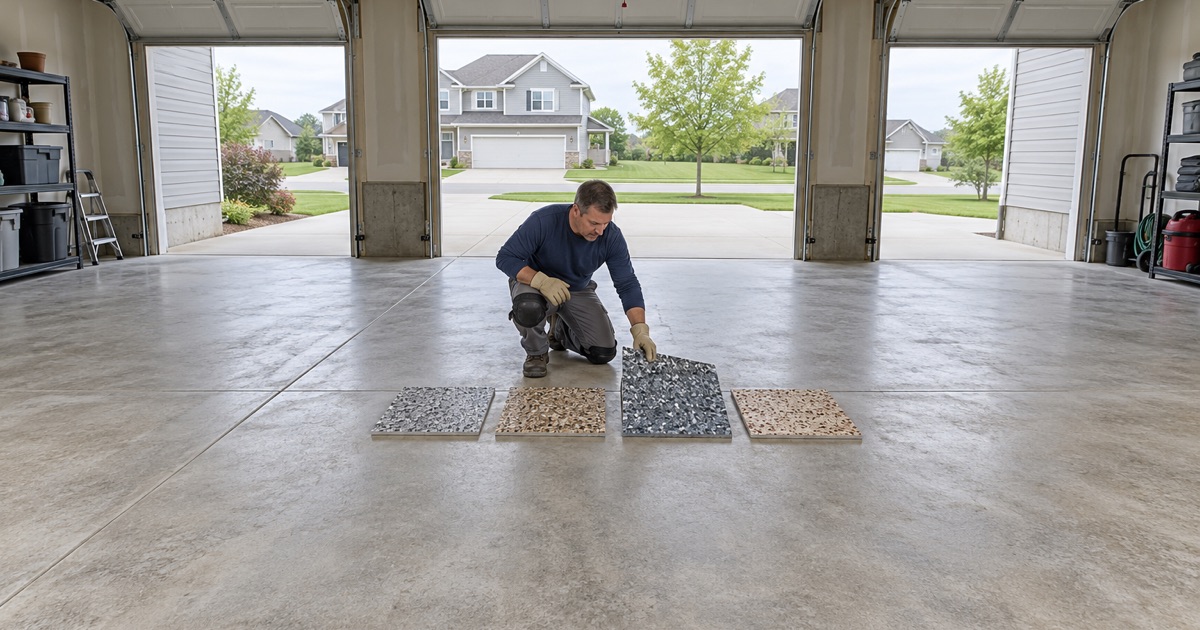
A vinyl flake broadcast is thrown into wet epoxy and locked in with a clear topcoat, giving the floor texture and hiding dust between cleanings. Blend and chip size change the look: small chips read as a fine speckle, while larger chips and a full broadcast give the terrazzo-like finish most garages choose.
Metallic epoxy uses pigments that move and settle as the resin levels, leaving a marbled, three-dimensional finish. It takes a flat, well-ground slab and a crew that works the pour in one continuous pass, because a lap line or a stalled edge stays visible after the coating cures.
Polished concrete is the slab itself ground and refined, then hardened with a lithium silicate densifier. How much aggregate shows depends on the grind depth and the concrete already there, from a cream finish to salt and pepper to full aggregate, so we grind a test area on your slab before promising a look.
A high-gloss topcoat looks sharp but shows dust, scratches and tire marks more readily. Satin and matte topcoats hide everyday wear better and can read as less slippery to the eye, and we help you weigh sheen against how the floor will actually be used.
A quartz aggregate broadcast puts colored sand into the coating, adding grip and color in one step. It suits ramps, wash bays and commercial kitchens where wet traction matters, and the size of the quartz and the topcoat thickness decide how aggressive the finished texture feels underfoot.
A plain solid color floor is often the right call for a shop, a utility room or a warehouse aisle, where cleaning and visibility matter more than pattern. It costs less than a flake or metallic system and shows spills clearly, which is exactly what some floors need.
Epoxy ambers and chalks in ultraviolet light, so a garage with the door open all summer or a sunlit entry can yellow over time. We top those floors with a UV-stable polyaspartic or polyurea coat that holds its color where the sun reaches it.
Saw-cut control joints, borders and logos can be built into a coated floor as a design feature. We decide early whether joints are filled flush or left visible, and layouts like borders or logos are masked and coated in stages so the lines stay crisp.
A commercial floor carries more traffic, more chemicals and a tighter schedule than a home garage. We scope the coating to the use, phase the work around operations, and write a schedule that names each area, its cure window and when equipment can return.
Urbandale has a long run of office-front, warehouse-back flex buildings, many in small bays leased to one tenant after another. What the last tenant left, whether sealer, paint, mastic or an old coating, decides whether a new floor can bond, so we test and grind before pricing.
Lobbies, corridors and break rooms are the floors clients and staff see first, so they have to look finished. We use metallic, flake or polished systems that hold up to rolling chairs and daily cleaning, and we work in sections so the space stays usable.
Retail and showroom floors have to be coated without closing the store. We phase the work in enclosed sections, often early in the morning or overnight, and pick systems with cure times that let fixtures go back on schedule.
Restaurant kitchens in Iowa are inspected against the 2017 FDA Food Code, which asks for smooth, durable, easily cleanable floors and coved floor-and-wall junctures under 6-201.13. We build an integral cove base and choose a textured finish for wet areas, which the code’s antislip exception in 6-201.11 allows.
Urethane cement handles the hot water, steam cleaning and harsh cleaners that soften a standard epoxy. It is our usual choice for kitchens, dish areas and food processing rooms, especially around grease interceptors and floor drains where the floor is wet for most of the shift.
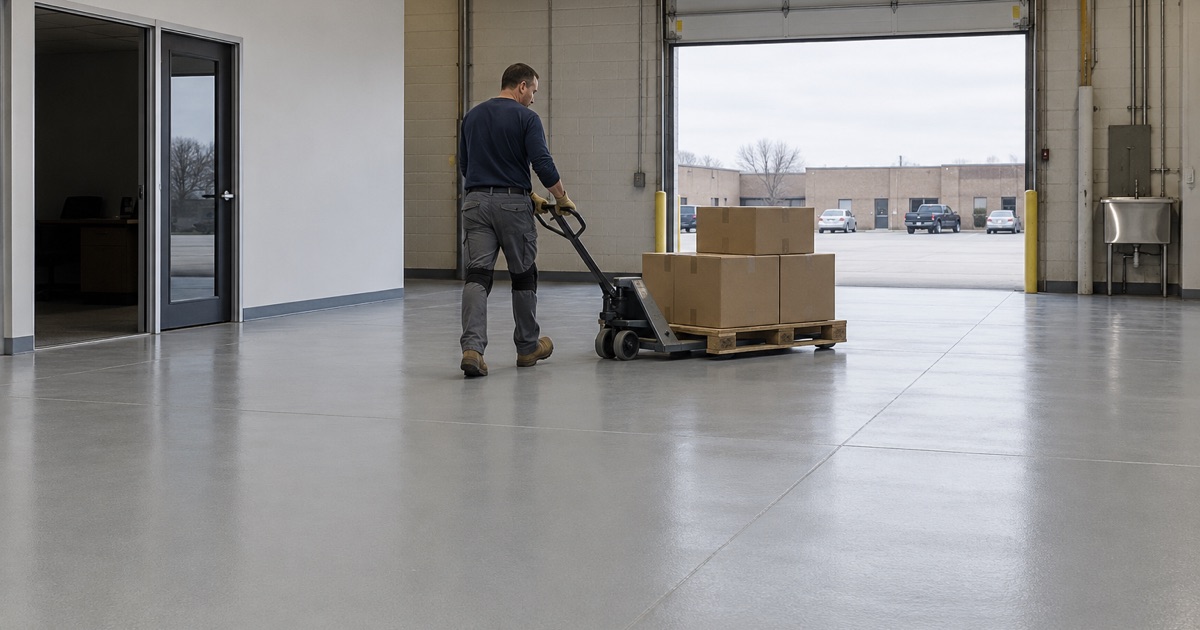
Warehouse and light industrial floors take forklifts, pallet jacks and dropped loads. We build thicker 100% solids epoxy or urethane cement systems in the traffic aisles, mark lanes and zones in the coating, and leave densified or polished concrete where the use allows.
Auto repair bays and fleet garages see oil, brake fluid, hot tires and rolling jacks every day. A chemical-resistant base with a hard topcoat and a light broadcast keeps fluids on the surface for cleanup, and a bright color makes dropped parts easy to find.
The federal architectural coatings rule in 40 CFR 59 Subpart D caps the VOC content of floor coatings sold in the United States. Meeting it does not make a product odorless, so we still offer low-odor systems for occupied buildings where staff and customers are breathing the air.
When a business cannot close, we phase flex bays, offices and warehouses around tenants and business hours, with night and weekend windows where a space has to stay open. Each phase is scheduled to its own cure time, so the next morning’s work starts on a usable floor.
Urbandale Epoxy Flooring provides epoxy-flooring throughout the greater Urbandale area, with the same crews and the same standards on every job.
Good to know
We price from the slab rather than from a flat rate per square foot. The things that move the number are the floor's area, how much crack and spall repair it needs, whether an old coating has to be ground off, the moisture result, and the system chosen, from a single solid color to a full flake broadcast with a polyaspartic topcoat. The written proposal shows each of those as its own line.
Most garage floors are ground, repaired and coated over one to two working days, depending on the system. Foot traffic usually follows within a day, while vehicles wait longer for the coating to cure. In a cold garage the schedule follows the slab temperature and dew point, which can stretch the timeline or push the work to a warmer month.
No. Every slab is opened mechanically with a diamond grinder or a shot blaster to a measured concrete surface profile. Acid etching leaves an uneven profile and residue that has to be rinsed toward a drain, while grinding gives the coating something consistent to bond to and lets us capture the dust at the machine.
Depending on the floor, we use the ASTM D4263 plastic sheet test as a quick screen, ASTM F1869 calcium chloride kits for vapor emission, or ASTM F2170 in-situ relative humidity probes set into the slab. The test is in the scope before the price is final, and the result decides whether the floor needs a moisture-mitigation primer.
They do different jobs. A 100% solids epoxy base builds thickness and bonds well to a ground slab, while a polyaspartic topcoat cures fast, holds its color in sunlight and resists the abrasion of daily traffic. Many of our garage systems use both, and the proposal names which layer is which.
Iowa Code chapter 91C sets up contractor registration in the state, and a homeowner can look up any contractor's registration status before signing. We encourage every customer to check that for whoever they hire. Registration is a state record, not a quality rating, so it belongs alongside a written scope rather than in place of one.
Sometimes, but only after the water is understood. We look for the source, check the sump pit and floor drain, let the slab dry, and test it before anything is applied. A coating does not stop seepage or hydrostatic pressure, so a floor that is still taking water needs a drainage fix first.
Some systems carry more odor than others while they cure. For attached garages and basements we offer low-odor products as a comfort and re-entry choice, and we plan ventilation around the rooms next to the work. Low odor is something to ask for, not something Iowa law requires.
Most coating warranties exclude failures caused by moisture vapor transmission and hydrostatic pressure from beneath the slab, along with impact damage and chemical spills outside the product's rating. We explain those exclusions before the job is sold, and moisture is the first one we name.
Request a free quote today and we'll get back to you fast.